- Kiki's Guide
- Posts
- Dry January, Without the Drama
Dry January, Without the Drama
Why stepping away from alcohol can quietly change everything

Kiki Sebring
December 28, 2025
January doesn’t need another rule. Or reset. Or moral overhaul.
What it can be is an experiment. One that asks a simple question:
What happens when alcohol is removed, even briefly?
Alcohol is woven into how we celebrate, connect, and unwind. But biologically, it is also a toxin. There is no health-promoting dose, only varying levels of harm depending on frequency, quantity, and individual resilience. That isn’t opinion. It is physiology.
Dry January isn’t about punishment. It is about information.

National Jewish Health’s Rev’ the Runway (Me Sans Drink)
A personal note
My decision to stop drinking was intentional. In my early thirties, I was in a long-term relationship with someone struggling with alcoholism. Being that close to addiction forces clarity. I began paying attention, not just to alcohol’s social role, but to its real impact on the body.
After a severe reaction to the COVID vaccine that landed me in the ER, I stopped drinking entirely. My nervous system was already under significant strain, and alcohol no longer felt compatible with healing. Life felt much better. I had better sleep, less inflammation, and more capacity.
Stepping away wasn’t restrictive. It was clarifying.

Why more people are questioning alcohol
You don’t need a medical degree to understand this part.
When you drink, your body drops everything else to process alcohol first. Detoxification, hormone metabolism, immune regulation, and blood sugar balance all take a back seat while ethanol is cleared. Institutions like the National Institute on Alcohol Abuse and Alcoholism and the World Health Organization are increasingly clear on this. Alcohol affects nearly every system in the body, even at levels long considered moderate.
If you want to go deeper, I’ll link studies below. For most people, the evidence shows up faster than the research, in sleep quality, energy, digestion, mood, and mental clarity.

What many people notice when they take a break
You do not need ninety days to learn something. Many people notice changes within weeks.
Better, deeper sleep
Less anxiety and nervous system reactivity
Reduced bloating and inflammation
Clearer skin and thinking
More consistent energy
Perhaps the most surprising shift is realizing how often drinking is about habit rather than desire.
Especially worth considering if you live with chronic illness
Alcohol increases inflammation, disrupts gut integrity, and burdens the immune system. These effects matter if you are managing chronic illness or autoimmune disease. Research published in journals like Frontiers in Immunology shows how alcohol can amplify immune dysregulation and inflammatory pathways.
For sensitive systems, removing alcohol even temporarily often creates space for the body to recalibrate.

You don’t have to give up the ritual
One reason Dry January fails is because people miss the experience, not the alcohol.
Thankfully, that has changed.
There are now non-alcoholic options that still feel adult, intentional, and enjoyable. The goal is not to replicate drinking perfectly, but to keep the ritual while removing the physiological cost.

Easy swaps that still feel good
If you are experimenting with Dry January, small swaps go a long way.
There are excellent alcohol alternatives you can order online through places like Amazon and specialty retailers.
Look for:
Non-alcoholic wines and sparklings
Botanical spirits designed for cocktails
Adaptogen-based drinks for evenings
Functional beverages that support relaxation or focus
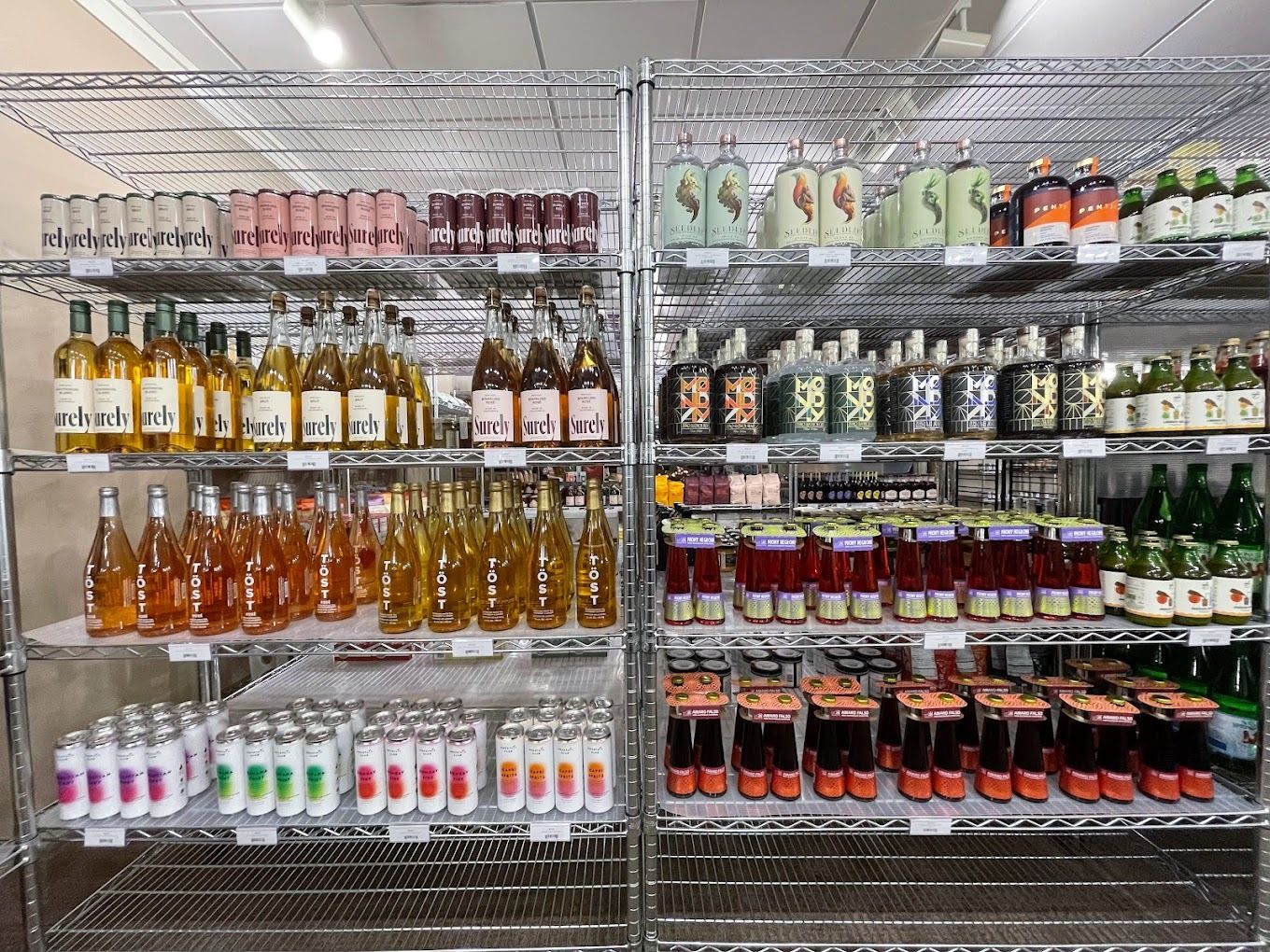
Where to shop in Denver
Ambrosian Pantry is a go-to for thoughtfully curated non-alcoholic wines, spirits, and elevated pantry staples. It is an easy place to browse if you want something that still feels intentional and social.

Death & Co Denver
Denver spots that take mocktails seriously
If you still want to go out, these places understand that non-alcoholic does not mean an afterthought.
Each offers non-alcoholic options built with the same care as their cocktails.
Creators worth following for Dry January ideas
Sometimes inspiration matters more than information.
These accounts share creative, realistic approaches to non-alcoholic drinks and rituals without turning sobriety into a personality.
The Mindful Mocktail focuses on simple, elevated mocktail recipes that feel calming and intentional.
Mocktail Girlie brings fun, accessible ideas that make Dry January feel social instead of restrictive.
Curious Elixirs offers beautifully crafted zero-proof cocktails and is also a great source of inspiration for at-home rituals.
Following a few aligned accounts often makes the experience feel lighter and more sustainable.
When January ends
Dry January is not a lifelong contract. It is a data-gathering exercise.
Ask yourself:
How does my body feel without alcohol?
When do I actually want it, and when is it automatic?
What level of consumption supports my health, not just my social life?
Awareness creates choice.
One last thought
Alcohol is inherently harmful. That does not make people who drink careless or wrong. It makes
alcohol a substance worth questioning.
Taking a break is not about saying no forever.
It is about listening long enough to decide what is actually worth saying yes to.

Sources and further reading
For readers who want to explore the science behind alcohol and health more deeply, these institutions and peer-reviewed publications provide clear, evidence-based information.
Alcohol and Health Risks
World Health Organization — No safe level of alcohol consumption
https://www.who.int/europe/news/item/04-01-2023-no-level-of-alcohol-consumption-is-safe-for-our-health World Health Organization
WHO fact sheet on alcohol risks
https://www.who.int/news-room/fact-sheets/detail/alcohol World Health Organization
Scientific article (PMC) confirming “no safe level”
https://www.ncbi.nlm.nih.gov/pmc/articles/PMC10318728/ PMC
The Lancet commentary on alcohol and health
https://www.thelancet.com/journals/lanrhe/article/PIIS2665-9913%2823%2900073-5/fulltext The Lancet
U.S. Surgeon General advisory: no safe level of alcohol and cancer risk
https://www.sciencealert.com/there-is-no-safe-level-of-alcohol-consumption-us-surgeon-general-warns ScienceAlert
Alcohol’s Effects on the Body
National Institute on Alcohol Abuse and Alcoholism — Alcohol’s effects on the body
https://www.niaaa.nih.gov/alcohols-effects-health/alcohols-effects-body NIAAA
CDC overview of alcohol use and health risks
https://www.cdc.gov/alcohol/about-alcohol-use/index.html CDC
NIAAA general alcohol health information
https://www.niaaa.nih.gov/alcohols-effects-health NIAAA